With the arrival of longer and brighter days, the use of sunscreen usually becomes a recurring habit. However, from the pharmacy counter we observe daily that photoprotection remains largely unknown. Protecting our skin goes far beyond avoiding a superficial burn; it is a direct intervention in our cellular health, in the prevention of skin cancer (melanoma), and in delaying photoaging.
Below, we analyze what scientific evidence tells us about how to defend our skin correctly.
The Solar Spectrum: Not all radiation is equal
When the sun hits our skin, we don't receive a single type of light. To choose the right protector, we must first understand what we are protecting against:
- UVB Radiation (The ones that "Burn"): They penetrate the epidermis (the most superficial layer of the skin). They are the main culprits for sunburns, direct damage to cellular DNA, and are closely linked to the development of skin cancer.
- UVA Radiation (The ones that "Age"): They pass through clouds, glass, and penetrate to the dermis (deep layer). They destroy collagen and elastin, being the silent culprits of premature photoaging, wrinkles, and spots (hyperpigmentation).
- Visible Light (HEV) and Infrared (IR): Visible light (which includes blue light from screens and the sun) worsens conditions such as melasma. Meanwhile, infrared radiation generates heat and oxidative stress, enhancing the damage of UV rays.
Decoding SPF: What does it really mean?
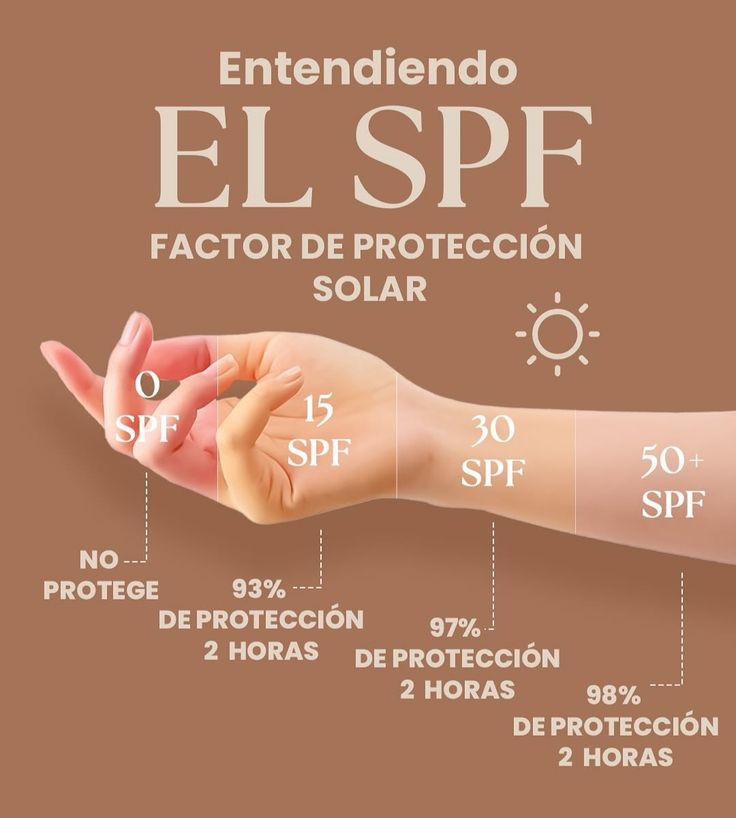
The Sun Protection Factor (SPF) mainly indicates the level of protection against UVB radiation. There is a widespread confusion about how this mathematical scale works.
It is often thought that an SPF 50 protects twice as much as an SPF 30, but science shows us another reality:
- An SPF 30 blocks approximately 97% of UVB rays.
- An SPF 50 blocks about 98% of UVB rays.
The difference seems minimal, but that extra 1% is crucial for sensitive skin, people with a history of sun damage, or during prolonged exposure. Furthermore, since most users do not apply enough product, using an SPF 50 helps compensate for that margin of error and guarantees safer protection.
Evidence-Based Guidelines: How to apply it correctly
The best sunscreen in the world loses all its effectiveness if not applied correctly. Dermatological studies establish two golden rules:
- Quantity matters (The two-finger rule): To reach the SPF indicated on the packaging, 2 milligrams of product per square centimeter of skin are needed. In practice, this is equivalent to applying two continuous lines of cream along the index and middle fingers. That is the exact amount your face and neck need.
- The reapplication clock: Sunscreens degrade with friction, sweat, sebum, and exposure to light itself. The strict clinical recommendation is to reapply every 2 hours, and always immediately after swimming or intense sweating.
Debunking Common Myths about the Sun
At the counter we hear many popular beliefs that put skin health at risk. Let's debunk two of the most repeated ones:
- Myth 1: "It's cloudy today, I don't need sunscreen". * Reality: Dense clouds only filter a part of the radiation. Up to 80% of UVA rays (those that cause aging and deep damage) manage to pass through cloudiness. Sun protection is non-negotiable 365 days a year.
- Myth 2: "I can use the open sunscreen I had left over from last summer".
- Reality: Sunscreens expire. Once opened, chemical and physical filters begin to oxidize and lose their stabilizing effectiveness. Look for the PAO symbol (an icon of an open jar) on the back of the packaging; it usually indicates "12M", which means that 12 months after opening, that product no longer protects you and should be discarded.
Your Skin is Unique: Let us Advise You
The perfect sunscreen is the one that adapts to your phototype, your lifestyle, and the specific needs of your skin (acne-prone, rosacea, spots, dry skin...).
If you have doubts about what texture to choose or how to integrate photoprotection into your daily routine, we invite you to visit us at the pharmacy. We are at Antonio López 139 (next to the Glorieta de Cádiz, Madrid). Our team will be happy to perform a personalized dermo-aesthetic evaluation to ensure your skin is healthy, strong, and protected against sun damage. We look forward to seeing you!


